
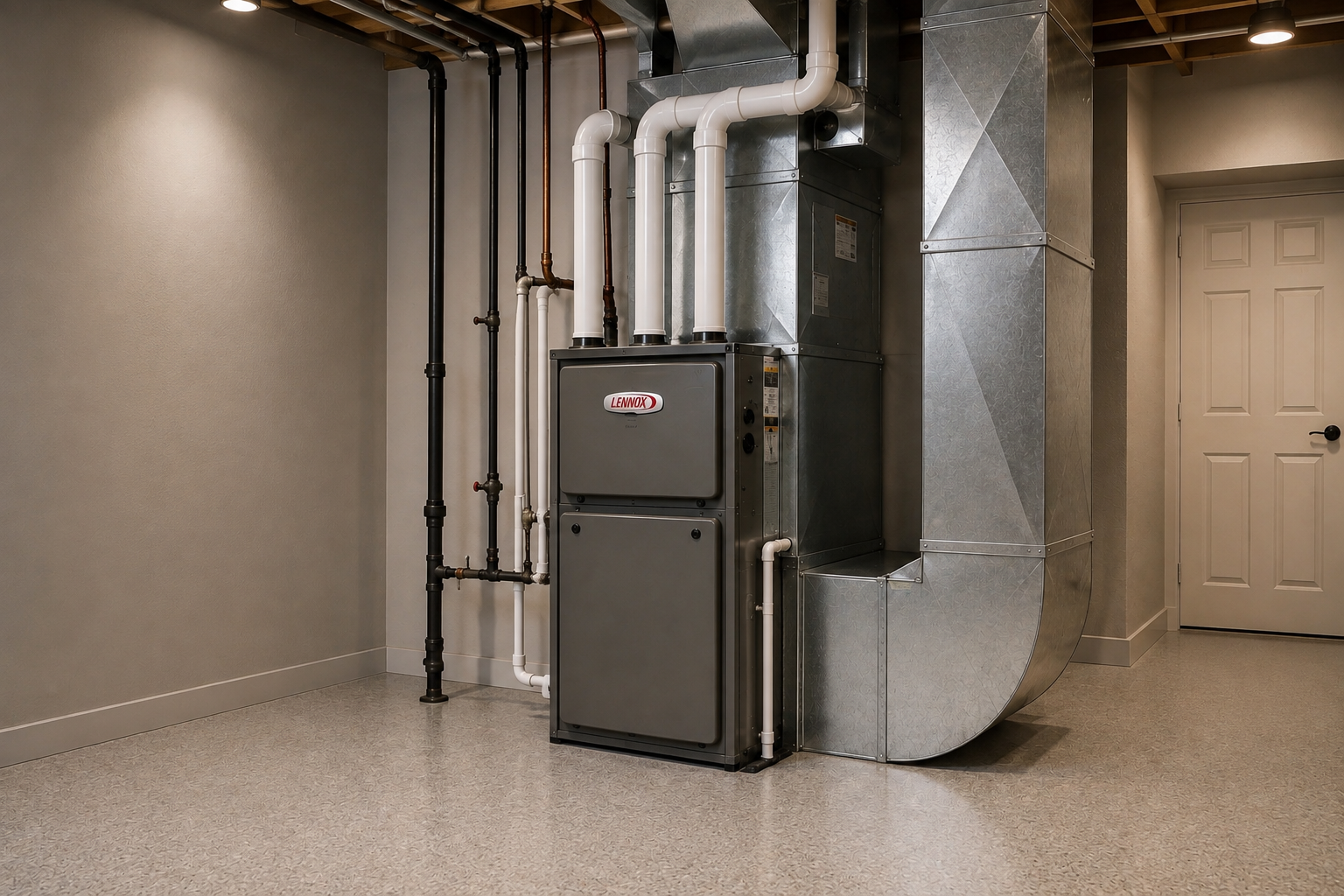
Choosing a new furnace is an important decision. The right system should do more than simply produce heat. It should be properly sized, energy efficient, compatible with your home, and capable of providing reliable comfort during colder weather.
A professional furnace recommendation should consider the entire home rather than focusing only on the equipment itself.
Start With Proper Furnace Sizing
One of the most important factors when selecting a furnace is size.
A furnace that is too small may struggle to keep up during colder weather. A furnace that is too large can create its own problems by heating the home too quickly and cycling on and off more often than necessary.
Frequent cycling can affect comfort, efficiency, and equipment wear.
Proper sizing should be based on factors such as the size of the home, insulation levels, windows, air leakage, layout, and local climate conditions.
Understand Furnace Efficiency Ratings
Furnace efficiency is commonly measured using AFUE, or Annual Fuel Utilization Efficiency.
A higher AFUE rating means a greater percentage of the fuel consumed is converted into usable heat for the home.
Higher-efficiency furnaces may cost more initially, but they can reduce fuel consumption over time. The right efficiency level depends on your budget, your home, and how long you expect to keep the equipment.
Compare Single-Stage, Two-Stage, and Modulating Furnaces
Not all furnaces operate the same way.
A single-stage furnace generally operates at full output whenever it is running. Two-stage systems can operate at a lower output during milder conditions and increase capacity when more heat is needed.
Modulating furnaces can make smaller adjustments to heat output, which may provide more consistent indoor temperatures and quieter operation.
The best option depends on your comfort expectations and budget.
Consider the Blower Motor
The furnace blower affects both airflow and electrical consumption.
Variable-speed blower motors can adjust airflow based on system demand, which may improve comfort and reduce noise compared with traditional single-speed motors.
They can also help support better air circulation and work well with certain air quality and zoning systems.
Look at the Existing Ductwork
Even a high-quality furnace will not perform properly if the duct system is poorly designed, undersized, damaged, or leaking.
Before installing a new furnace, it is worth checking whether the existing ductwork can handle the airflow requirements of the new equipment.
Correcting duct issues at the same time as a furnace upgrade may improve comfort and system performance.
Think About Noise and Comfort
Furnace selection is not only about heating capacity.
Homeowners may also want to consider operating noise, airflow, temperature consistency, and how quickly the system responds to changes in demand.
Equipment with staged heating and variable-speed airflow can often provide a smoother and quieter comfort experience.
Consider Long-Term Operating Costs
The lowest purchase price does not always mean the lowest total cost of ownership.
Energy consumption, expected maintenance, repair costs, warranty coverage, and system lifespan should all be considered when comparing options.
A more efficient or better-performing furnace may cost more initially but could provide advantages over the life of the equipment.
Know When Repairing No Longer Makes Sense
Not every furnace problem requires replacement.
However, if an older furnace needs frequent repairs, struggles to heat the home evenly, operates inefficiently, or has a significant component failure, replacement may become the more practical long-term option.
A professional assessment can help compare the cost of continued repairs with the expected benefits of a newer system.
Professional Installation Matters
Even the right furnace can perform poorly if it is not installed correctly.
Proper venting, gas connections, electrical work, airflow setup, thermostat configuration, and system testing are all important parts of a professional installation.
Correct installation helps ensure the equipment operates as intended and supports reliable performance over time.
Final Thoughts
The best furnace for your home is not simply the most expensive or highest-efficiency model. It is the system that is properly sized, professionally installed, compatible with your ductwork, and aligned with your comfort and budget.
Taking the time to evaluate these factors before purchasing can help you make a more confident decision and avoid problems later.
Venta Home Comfort can help assess your existing heating system and recommend furnace options suited to your home.
Get a Free Quote to discuss furnace replacement or installation options.